撰文者:廖珮岑
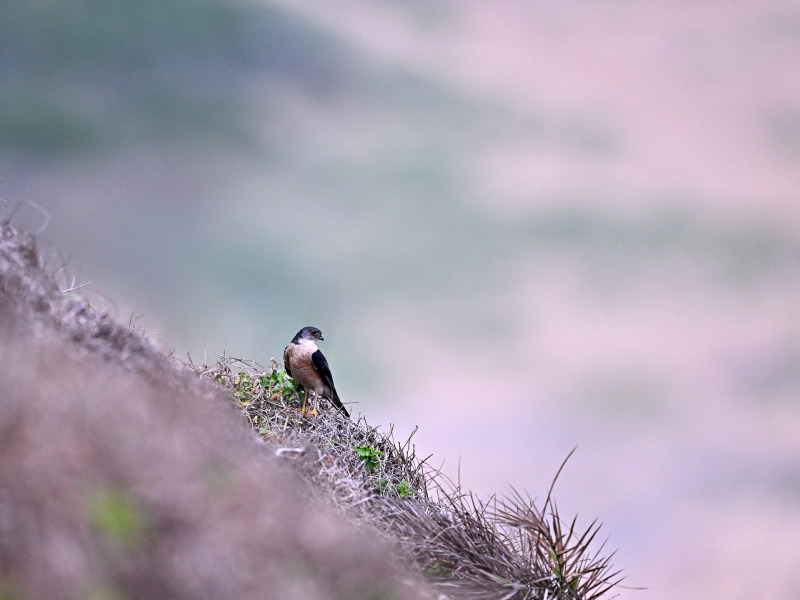
每年秋過境的季節,當大量的赤腹鷹飛經台灣上空時,總會有零星一、兩隻日本松雀鷹混入其中,與赤腹鷹一同遷徙。這些日本松雀鷹是來自朝鮮半島、日本、俄羅斯極東地區,牠們沿著日本,走海路經過台灣與菲律賓,再向南遷徙至北蘇拉威西及婆羅洲度冬。
也不只是這群日本松雀鷹喜歡悄悄混在遷徙群中,來自西伯利亞及中國東北的日本松雀鷹,也同樣喜歡在向南至泰國、馬來西亞、蘇門答臘、爪哇度冬時,混在許多不同的過境猛禽中,一同乘著大陸的順風與熱氣流展開長途旅行。
日本松雀鷹是一種仰賴森林生存的鳥類,牠們經常在林子裡狩獵小型鳥類,也喜歡吃老鼠、爬蟲類,要捕抓空中快速飛行的蝙蝠和昆蟲們也難不倒牠們。
在日本繁殖的日本松雀鷹,原本可以容忍巨嘴鴉在其巢穴一定範圍內共同築巢,1990年代後,隨著巨嘴鴉族群量逐漸增加,適合繁殖的棲地減少,日本松雀鷹不是逐漸縮短兩物種的巢穴距離,減少領域與威嚇力,要馬就是放棄與巨嘴鴉共域,搬出松樹林,使用其他樹種繁殖。這樣的關係改變,也間接造成原本喜歡築巢在日本松雀鷹巢穴附近的灰喜鵲改變築巢習慣,現在日本幾乎已經找不到築巢在日本松雀鷹附近的灰喜鵲了。
關係與行為的改變成為日本松雀鷹在日本族群下降的原因之一。不過日本的琉球群島還有另一群不會遷徙的定居型日本松雀鷹,由於棲地減少,繁殖成功率下降,被列為瀕危物種,受到日本政府高度的關注。
延伸閱讀
- Catanach, T. A., Halley, M. R., & Pirro, S. (2024). Enigmas no longer: using ultraconserved elements to place several unusual hawk taxa and address the non-monophyly of the genus Accipiter (Accipitriformes: Accipitridae). Biological Journal of the Linnean Society, blae028.
- Iseki, F., Mikami, K., & Sato, T. (2021). Unique and Complicated Wing Molt of the Japanese Sparrowhawk Accipiter gularis. Journal of the Yamashina Institute for Ornithology, 53(1).
- Kang, S. G., & Hur, W. H. (2017). New moult pattern in diurnal raptors: primary moult pattern of the Japanese Sparrowhawk Accipiter gularis. Ringing & Migration, 32(1), 28-36.
- Lorsunyaluck, B., Tandavanitj, P., & Kasorndorkbua, C. (2008). Autumn migration of Chinese Sparrowhawk Accipiter soloensis and Japanese Sparrowhawk Accipiter gularis at Radar Hill, Prachuap Khiri Khan, Thailand. Warasan Satpa Muang Thai, 15, 74-79.
- Liu, G., Li, C., Du, Y., & Liu, X. (2017). The complete mitochondrial genome of Japanese sparrowhawk (Accipiter gularis) and the phylogenetic relationships among some predatory birds. Biochemical Systematics and Ecology, 70, 116-125.
- Ma, L., Zhang, Z., Huo, D., Wang, J., & Hou, J. (2024). A Struggle Between Two Predators: Nest Predation of a Japanese Sparrowhawk (Accipiter gularis) by a Siberian Weasel. Journal of Raptor Research, 58(3), 392-395.
- Nagai, K., Manawatthana, S., Tokita, K. I., Nualsri, C., Pierce, A. J., Sutasha, K., ... & Higuchi, H. (2020). Genetic Structure in Japanese and Thai Populations of the Japanese Sparrowhawk Accipiter gularis. Zoological science, 37(3), 232-239.
- Nijman, V., Germi, F., & van Balen, S. B. (2006). Relative status of two species of migrant sparrowhawks on Java and Bali, Indonesia. Emu-Austral Ornithology, 106(2), 157-162.
- Nualsri, C. H. U. K. I. A. T., Round, P. D., Pierce, A. J., Sutasha, K. A. S. E. T., Phothieng, D. U. A. N. G. R. A. T., Sribuarod, K., & DeCandido, R. (2013). Ringing migrant sparrowhawks in southern Thailand. BirdingAsia, 20, 37-43.
- Oommen, M. A., & Shanker, K. (2010). Shrewd alliances: mixed foraging associations between treeshrews, greater racket-tailed drongos and sparrowhawks on Great Nicobar Island, India. Biology Letters, 6(3), 304-307.
- Pierce, A. J., Nualsri, C., Sutasha, K., & Round, P. D. (2021). Determining the migration routes and wintering areas of Asian sparrowhawks through satellite telemetry. Global Ecology and Conservation, 31, e01837.
- Toshiharu, A., Shoji, M., Tamiko, K., Masanobu, H.(2011). An Observation of Predation by Japanese Sparrowhawk Accipiter gularis on a Fledgling of a Gound nesting Species, Red-flanked Bluetail Tarsiger cyanurus. The Bulletin of the Japanese Bird Banding Association, 23(2), 61-65.
- Ueta, M. (2007). Effect of Japanese lesser sparrowhawks Accipiter gularis on the nest site selection of azure‐winged magpies Cyanopica cyana through their nest defending behavior. Journal of Avian Biology, 38(4), 427-431.
- Ueta, M., & Hirano, T. (2006). Population decline of Japanese lesser sparrowhawks breeding in Tokyo and Utsunomiya, Central Japan. Ornithological Science, 5(2), 165-169.
- Wang, H., Yan, J., & Zhang, Z. (2017). Sexual dimorphism in jaw muscles of the Japanese sparrowhawk (Accipiter gularis). Anatomia, histologia, embryologia, 46(6), 558-562.
- Yuni, L. P. E. K., & Tyas, S. A. (2020). Interspecific correlations toward climatic factors in migratory raptor species across Mt. Sega, Karangasem, Bali. In IOP Conference Series: Earth and Environmental Science (Vol. 590, No. 1, p. 012005). IOP Publishing.