撰文者:廖珮岑
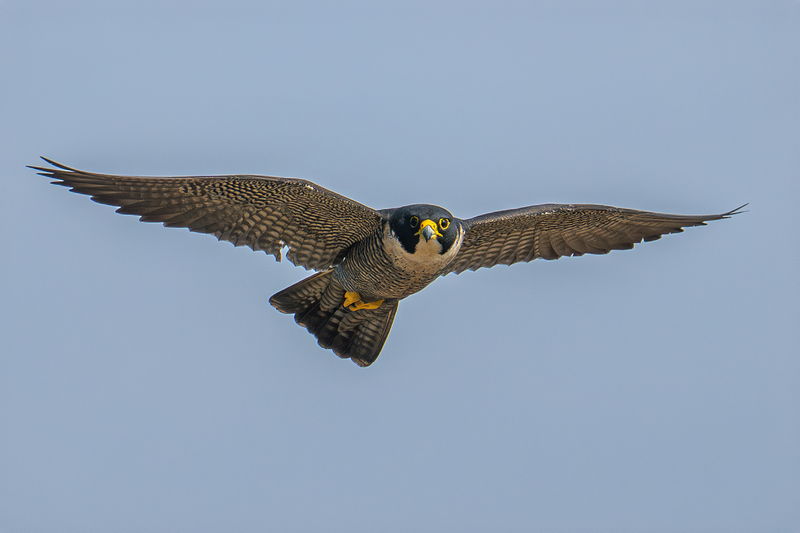
全世界除了南極洲以外,都可以看到遊隼的身影。牠的拉丁學名「Peregrinus」有浪人或旅人的意思,主要是因為遊隼會在冬季時出現在中南歐,反應出遊隼遷徙的習性。不過並非所有遊隼都會遷徙,主要為高緯度地區的遊隼族群會遷徙。由於遊隼可以不依賴熱氣流,自行拍翅遷徙,牠們遷徙時,時常獨來獨往,而且通常直直向著目標而去。目前最遠的遷徙紀錄有從西俄羅斯,行經阿拉伯半島,最後抵達非洲南部的紀錄。
遊隼是目前鳥類飛行速度紀錄中最快的鳥種,擅長從高處高速俯衝至地面,時速可達300 km/hr,且能靈活地迅速轉彎,並快速地攀升回到高空。這樣的速度與機動性,使得牠們非常擅長捕抓鳥類,不論體型和習性,什麼鳥都吃,能根據棲地和季節調整飲食。也因為這樣的狩獵技巧,遊隼自古以來即是鷹獵愛用鳥,尤其在歐洲及阿拉伯半島。
不過也因為遊隼狩獵鳥的習性,牠們與養鴿團體有著漫長的糾葛歷史。以英國為例,英國賽鴿產業歷史悠久,在一次世界大戰期間,鴿子成為軍事情報的傳遞工具,由於信鴿容易被遊隼捕食,戰爭期間甚至興起遊隼懸賞,大量獵殺遊隼。不過後來因為德國也使用信鴿傳遞情報,使得遊隼馴鷹術成為戰時攔截敵方軍情的重要技術。
二次大戰後,遊隼因為殺蟲劑和農藥的不當使用,族群大量下降,導致許多地區幾近野外滅絕。歐美國家為保育遊隼,開始重新引入遊隼,這時的遊隼馴鷹繁殖技術成為保育知識的基石。在遊隼族群量緩慢回升後,部分國家為了增加繁殖遊隼的基因多樣性,開放捕抓野生遊隼,而用於馴鷹的遊隼皆規定為人工合法繁殖之個體。
遊隼於1990年代後逐漸適應城市環境,主要捕食城市中大量出沒的野鴿,在南歐,遊隼融入城市得益於賽鴿產業的興盛。原本被認為是日行性的遊隼,在進駐城市後逐漸適應人造光源,而出現夜間狩獵的習性,除了鳥類,也會捕抓蝙蝠。
遊隼在台灣多是冬候鳥或過境鳥,不過也有留下來繁殖的紀錄。
延伸閱讀
- 黃光瀛、劉小如、邱銘源,2006。日行性遊隼於高屏溪橋之夜間獵食行為,台灣猛禽研究, (6), 12-17。
- AlAli, A. M., Abbas, Y. A., & Nassar, F. S. (2024). Climate Change and Its Impacts on Saker (Falco cherrug) and Peregrine (Falco peregrinus) Falcons: How the Changes Will Affect Their Migration, Diet, Offspring, and Conservation Efforts. Journal of Ecohumanism, 3(8), 228-237.
- Bruggeman, J. E., Swem, T., Andersen, D. E., Kennedy, P. L., & Nigro, D. (2016). Multi‐season occupancy models identify biotic and abiotic factors influencing a recovering Arctic Peregrine Falcon Falco peregrinus tundrius population. Ibis, 158(1), 61-74.
- Beingolea, O., & Arcilla, N. (2020). Linking Peregrine Falcons'(Falco peregrinus) Wintering Areas in Peru with Their North American Natal and Breeding Grounds. Journal of Raptor Research, 54(3), 222-232.
- Castagna, F., Montano, L., Lombardi, R., Pagano, A., Gigliotti, A., Bava, R., ... & Liguori, G. (2024). Understanding Environmental Contamination Through the Lens of the Peregrine Falcon (Falco peregrinus). Environments, 11(12), 264.
- Choi, C. Y., & Nam, H. Y. (2015). Diet of Peregrine Falcons (Falco peregrinus) in Korea: food items and seasonal changes. Journal of Raptor Research, 49(4), 376-388.
- Dell'Omo, G. (2021). Peregrine falcon Falco peregrinus. In Migration Strategies of Birds of Prey in Western Palearctic (pp. 251-254). CRC Press.
- Kéry, M., Banderet, G., Müller, C., Pinaud, D., Savioz, J., Schmid, H., ... & Monneret, R. J. (2022). Spatio‐temporal variation in post‐recovery dynamics in a large Peregrine Falcon (Falco peregrinus) population in the Jura mountains 2000–2020. Ibis, 164(1), 217-239.
- Kettel, E. F., Gentle, L. K., & Yarnell, R. W. (2016). Evidence of an urban Peregrine Falcon (Falco peregrinus) feeding young at night. Journal of Raptor Research, 50(3), 321-323.
- López-López, P., Verdejo, J., & Barba, E. (2009). The role of pigeon consumption in the population dynamics and breeding performance of a peregrine falcon (Falco peregrinus) population: conservation implications. European Journal of Wildlife Research, 55, 125-132.
- Mak, B. (2024). On the tail of two species: The changing place of the peregrine falcon in society. People and Nature, 6(5), 2157-2173.
- McGrady, M. J., Hines, J. E., Rollie, C. J., Smith, G. D., Morton, E. R., Moore, J. F., ... & Oli, M. K. (2017). Territory occupancy and breeding success of Peregrine Falcons Falco peregrinus at various stages of population recovery. Ibis, 159(2), 285-296.
- McKinnon, R. A., Hedlin, E., Hawkshaw, K., & Mathot, K. J. (2024). Food supplementing peregrine falcon (Falco peregrinus tundrius) nests increases reproductive success with no change in mean parental provisioning rate. Royal Society Open Science, 11(9), 240576.
- Ponnikas, S., Ollila, T., & Kvist, L. (2017). Turnover and post‐bottleneck genetic structure in a recovering population of Peregrine Falcons Falco peregrinus. Ibis, 159(2), 311-323.
- Puchała, K. O., Nowak-Życzyńska, Z., Sielicki, S., & Olech, W. (2022). Evaluation of the Impact of the Peregrine Falcon (Falco peregrinus peregrinus) Reintroduction Process on Captive-Bred Population. Genes, 13(8), 1487.
- Searle, A., Turnbull, J., & Adams, W. M. (2023). The digital peregrine: A technonatural history of a cosmopolitan raptor. Transactions of the Institute of British Geographers, 48(1), 195-212.
- Schneider, L. M., de Oliveira Santos, C., Lima, L. M., & Hingst-Zaher, E. (2023). Peregrine falcon Falco peregrinus in Brazil: natural history through the lens of citizen science. Ornitología Neotropical, 34(1), 29-39.
- Shobrak, M. Y. (2015). Trapping of Saker Falcon Falco cherrug and Peregrine Falcon Falco peregrinus in Saudi Arabia: implications for biodiversity conservation. Saudi Journal of Biological Sciences, 22(4), 491-502.
- Sonsthagen, S. A., Williams, J. C., Drew, G. S., White, C. M., Sage, G. K., & Talbot, S. L. (2017). Legacy or colonization? Posteruption establishment of peregrine falcons (Falco peregrinus) on a volcanically active subarctic island. Ecology and Evolution, 7(1), 107-114.
- Stirling-Aird, P. (2015). Peregrine falcon. Bloomsbury Publishing.
- Varland, D. E., Buchanan, J. B., Fleming, T. L., Kenney, M. K., & Vanier, C. (2018). Scavenging as a food-acquisition strategy by Peregrine Falcons. The Journal of Raptor Research, 52(3), 291-308.
- Weaving, A., Jackson, H. A., Nicholls, M. K., Franklin, J., & Vega, R. (2021). Conservation genetics of regionally extinct peregrine falcons (Falco peregrinus) and unassisted recovery without genetic bottleneck in southern England. Conservation Genetics, 22(1), 133-150.
- Wink, M. (2018). Phylogeny of Falconidae and phylogeography of Peregrine Falcons. Ornis Hungarica, 26(2), 27-37.
- Zabala, J., & Zuberogoitia, I. (2015). Breeding performance and survival in the peregrine falcon Falco peregrinus support an age‐related competence improvement hypothesis mediated via an age threshold. Journal of Avian Biology, 46(2), 141-150.